


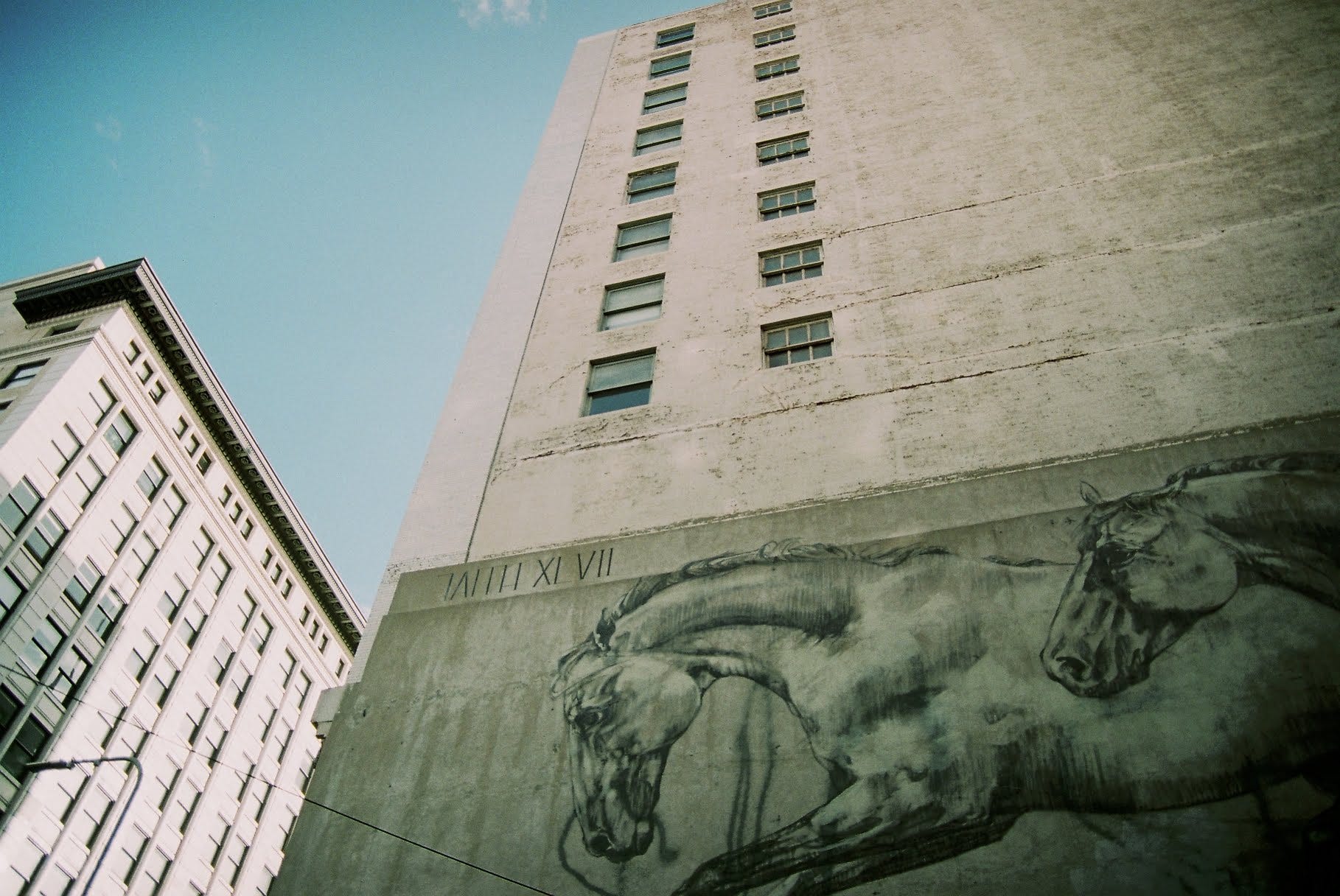
I had a dream recently that I was standing inside a large, open stable, filled with horses. At first, they were calm—standing quietly, grazing, or resting, their bodies relaxed and their attention soft. But as I moved closer to them, things began to change.
The horses grew agitated. Their bodies tensed, and a nervous energy spread. Subtle at first, then obvious. I felt the restlessness growing, like energy just under the surface, getting ready to burst into action. Things could tip quickly, and I knew I had to respond. So I slowed down. I planted my feet, let my weight settle, and held my arms out with open palms to show I meant no harm. Then I moved my hands slowly up and down, in a steady rhythm.
“Whoa, easy guys… easy…”
I used my whole body—my breath, my pace, and my intention—to stay connected without trying to control or force anything. I meant to meet their energy without adding to it.
But I woke up before anything was resolved. The horses never fully settled, and the image lingered in my mind. I kept wondering why this dream came to me.
It’s March 2026 as I write this, the year of the Fire Horse in the Chinese lunar calendar. I was born in a Horse year too (1990), and the symbolism of this animal has always meant a lot to me. Throughout history, horses have stood for power, movement, life force, and the raw ability—horsepower—to get things done.
Horses can seem calm and steady, but suddenly show huge bursts of wild, unmatched power. They can move fast, carry heavy loads, change direction, and push through obstacles. That power is immense, but it also has both a light and a dark side.
I’ve noticed this in myself and in the people I work with. A lot of us are running on that same kind of inner horsepower. The energy, the drive, and the capacity to act, to build, to create, to move forward is often high. But it isn’t always clear what is actually motivating that movement, and we haven’t always learned how to contain or direct that power safely. Without direction or boundaries, that energy can tip into excess. Uncontained, it can turn in ways that aren’t always constructive.
That was what stood out in the dream. The horses weren’t moving with any real direction. They had become unsettled, reactive. Something in their environment had set them off, and their power was rising from that place. The momentum wasn’t coming from purpose. It was coming from fear. And that raises an important question:
When we are moving quickly, producing, or pushing forward, what is actually ushering that movement?
Is it chosen—purpose, direction, intention? Or is it something more reactive, like urgency, fear, scarcity, the need to stay ahead, or the effort to keep things from falling apart?
From the outside, these can look almost identical. But internally, they are very different experiences.
The Light and Shadow of the Chariot
As I thought about the dream and the symbolism of the horse, another image came to mind: the Chariot from the Tarot.
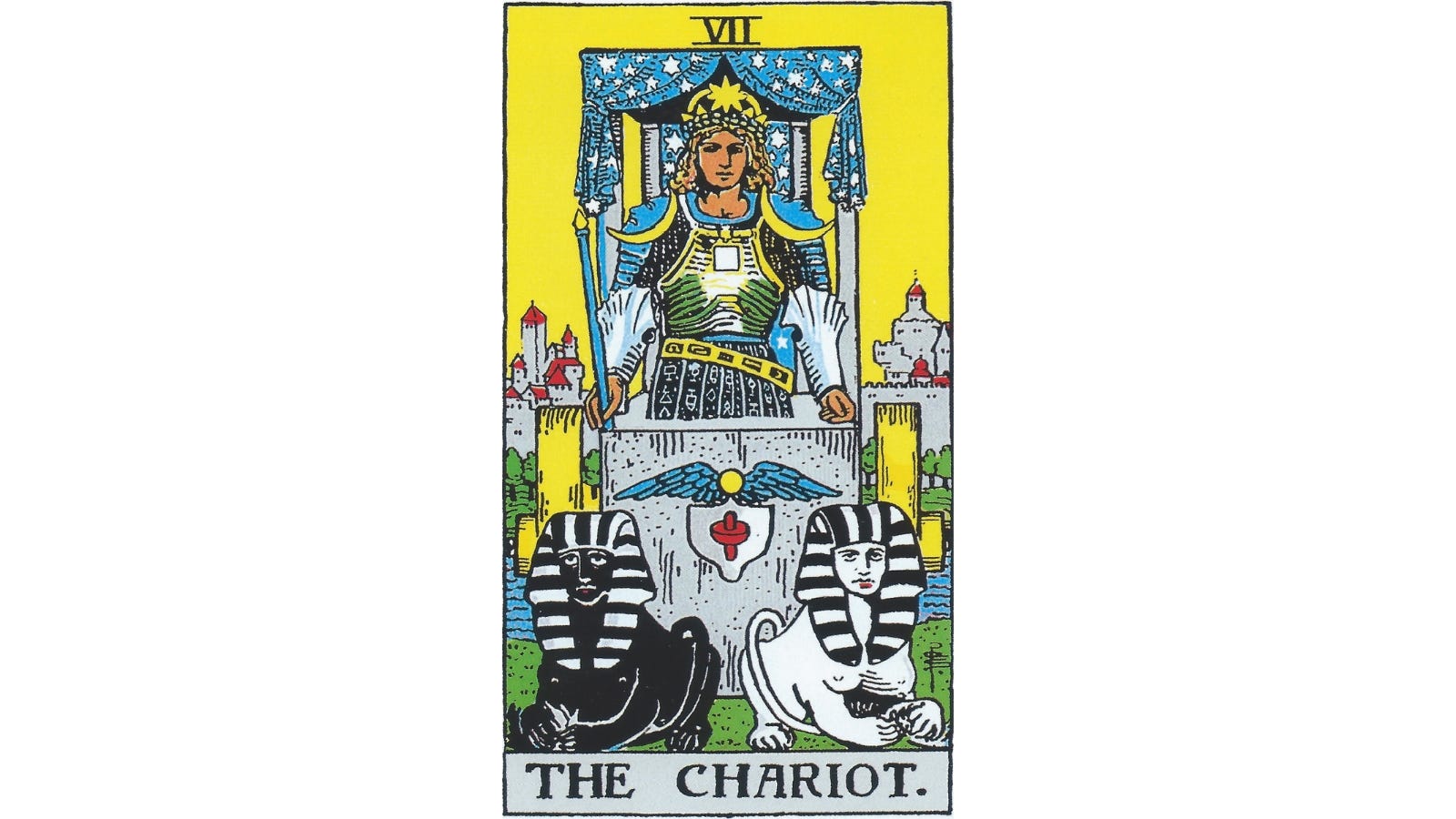
It evokes a very different feeling. Here, the animals aren’t unsettled or reactive. They are directed. Their movement is regulated and held by something strong enough to lead them.
At its best, the Chariot represents the ability to take raw force and channel it with clarity. It speaks to will, aspiration, and the capacity to hold opposing drives together while moving forward with intention. This is controlled momentum; power that has been harnessed and put to use.
But that same posture carries a risk.
The Chariot depends on control and on the power of ones will, and the movement is sustained by keeping everything held together, balanced, and moving in the same direction. Over time, that requires effort, and the entire body begins to organise around that effort. What once felt like momentum can begin to feel like pressure.
Notice how the figure in the Chariot isn’t relaxed. He looks stiff and almost frozen. There’s no rest in this position. Everything is held together through force, control, and restraint. If that tension slips, and the instinctive force and the directing will start to pull in different directions, the whole structure can become unstable very quickly.
You can see this in the body, and you can see it in people. We all have parts that move instinctively—creative, reactive, passionate, alive—and parts that organise, direct, manage and control. When they work together, the movement feels clear, coherent, like you’re in flow. When they split, you feel the strain. One moment everything is moving; the next, you’ve got nothing left to give.
This is where the shadow of the Chariot comes in.
The momentum keeps us moving, but often without enough pause or space. We have the horsepower, but it’s being driven in a way the system can’t sustain. Over time, the grip tightens. And in the process, it can disconnect from the very instincts, creativity, and life force it’s meant to guide.
The Pattern of Expansion
If you’re a founder, a creative, or a professional in a world that rewards speed and innovation, you likely recognise this pattern in yourself. You’re equipped with the will and the drive. You’ve learned how to use it. To build, to solve, to create, to expand. To move forward with force and clarity. So you keep directing that force outward. You produce, move things forward, and make things happen. For a long time, it works. The momentum feels good, really good. It can feel like you’re achieving something and becoming someone. Often, it brings recognition, a sense of progress, and proof that what you do matters.
The momentum continues, the achievements stack, you’re accomplishing a lot. But over time, it can start to feel like something isn’t quite landing. Like the chariot that keeps driving forward without ever stopping to take in where it’s been—there’s no real moment where it feels like it arrives.
When most of your energy is directed outward you can gradually lose access to something else: the capacity to receive.
Giving and receiving don’t run on the same channel. They require different states in the body. And when you spend most of your time pushing, producing, and directing, those receiving pathways become less familiar. It’s subtle; on the surface, everything still looks like it’s working. But internally, it might feel like something is missing.
And that’s where a loop forms. Instead of pausing, you push harder. You do more, achieve more, move faster, assuming that if you just get a bit further, it will finally land. That whatever feels off will correct itself.
At some point, you might notice you’re carrying more than others. You’re the one people rely on. The one holding things together. But when it comes to being supported, it’s not always there in the way you expect.
There’s an unsettling question underneath that: can anyone actually hold what I’ve been carrying?
Over time, the imbalance builds. You get very good at doing, but less used to taking anything in. Less used to simply being. Rest, pleasure, support, being seen without proving yourself; these can start to feel unfamiliar, even uncomfortable.
So the momentum outward continues, but the system is running on less.
Eventually, something gives. The body starts to lose capacity. The energy that once felt easy to access becomes harder to find. What used to feel like momentum now feels like effort.
And this is where burnout begins to take shape.
Alexander and the Cost of Being Great
History shows a similar pattern. Alexander the Great built his empire on cavalry—on horsepower, literally. He rode into battle with relentless force and momentum, conquering most of the known world before he turned thirty. He was driven by the need to be seen as great, to leave something that would outlast him. And he succeeded. His name still stands for power and conquest.
He died at 32.
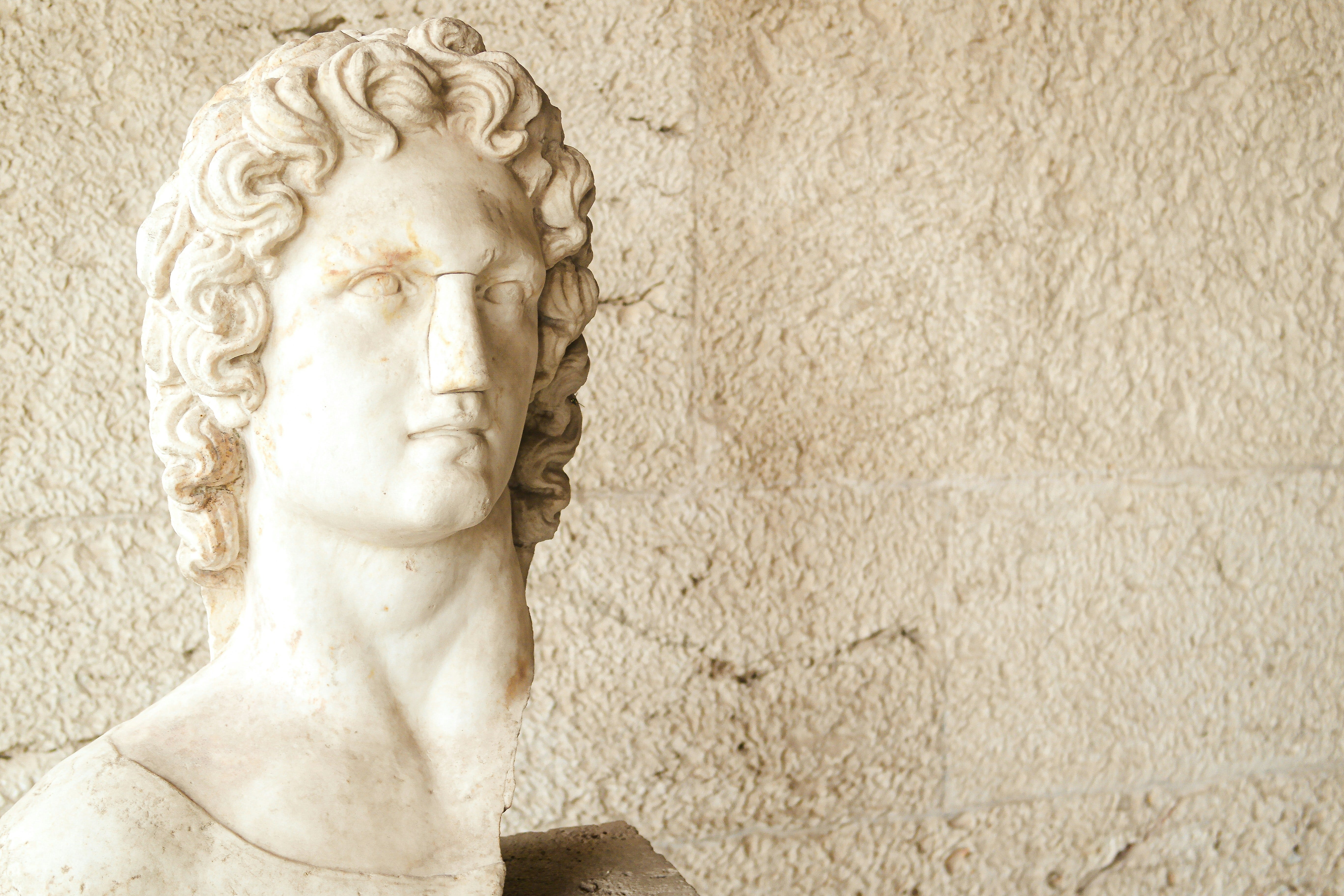
After all that movement, all that force, all that expansion, the question isn’t just what he achieved. It’s what any of it gave him.
He burned through his life so completely that historians still debate whether exhaustion and illness killed him, or whether the constant drive to expand, to conquer, to be remembered as the greatest simply used him up. This is where the pattern becomes harder to ignore.
When everything is being directed outward—toward achievement, recognition, legacy—what is actually being received in return? What is landing in the body? What is being replenished?
What Regulation Actually Looks Like
In my dream, I never found out what happened next. The horses stayed restless, and I woke up feeling uncertain. What I noticed wasn’t resolution, but the lack of it. The sense of something still in motion, still unsettled.
A lot of the time, that’s what regulation can feel like. It doesn’t always feel clear or finished. It might not seem like anything has really worked. Sometimes, it just feels like an open question.
You pause and try to stay present. But in the moment, it can still feel unclear, even uncomfortable. So it’s easy to push past it, or ignore what you notice. Slowing down can start to feel unsafe, simply because it’s unfamiliar, not because it actually is. Especially if you’re used to moving at speed.
For many high-achieving people, slowing down doesn’t feel neutral. It can feel like you might lose control. Like if you stop long enough to really notice what’s happening, something else might come with it. So you keep going. Like a chariot that continues forward, even when the road gets rough.
But what happens if you do slow down? What happens if you don’t rush past? What happens if you stay long enough to really notice what’s there?
That’s where regulation begins. Not in getting it right, but in staying with what’s there instead of moving past it too quickly. Sometimes it looks like loosening your grip on the reins, instead of holding so tightly that your hands start to cramp.
The Question Most People Don’t Ask
We’re in the year of the Fire Horse. That’s significant. It’s a time when this energy, this power, this restlessness, this drive to move and create and expand, is particularly alive in all of us. So before you channel all that horsepower outward again, before you get back to the building and the proving and the becoming, sit with this for a moment:
Where is your power actually going? Not where you want it to go, but where it is, right now.
What are you channelling it into? Being seen as great? Proving your worth? Building something that matters? Escaping something?
And have you stopped to ask yourself: what does achieving that actually give me? Not in the future, when everything is finally complete. Now. In this moment. Is it filling something real? And what is it taking?
There’s no right answer. But there’s a difference between power that’s been examined and power that’s just running wild. Between a stampede and a dance. Between being driven by your horsepower and being in relationship with it.
When this kind of power is active, it can be hard to slow down long enough to question it.
If something in this piece resonated—the pace, the drive, the sense that things don’t quite land, or that support doesn’t fully meet you—this is the kind of work I do with clients.
I’m currently offering a limited number of 90-minute deep-dive sessions over the next few weeks.
If you want to explore working together, you can book a session here or learn more about how I work.